
Healthcare Lockbox Processing Services for Checks, EOBs, and Payment Documents
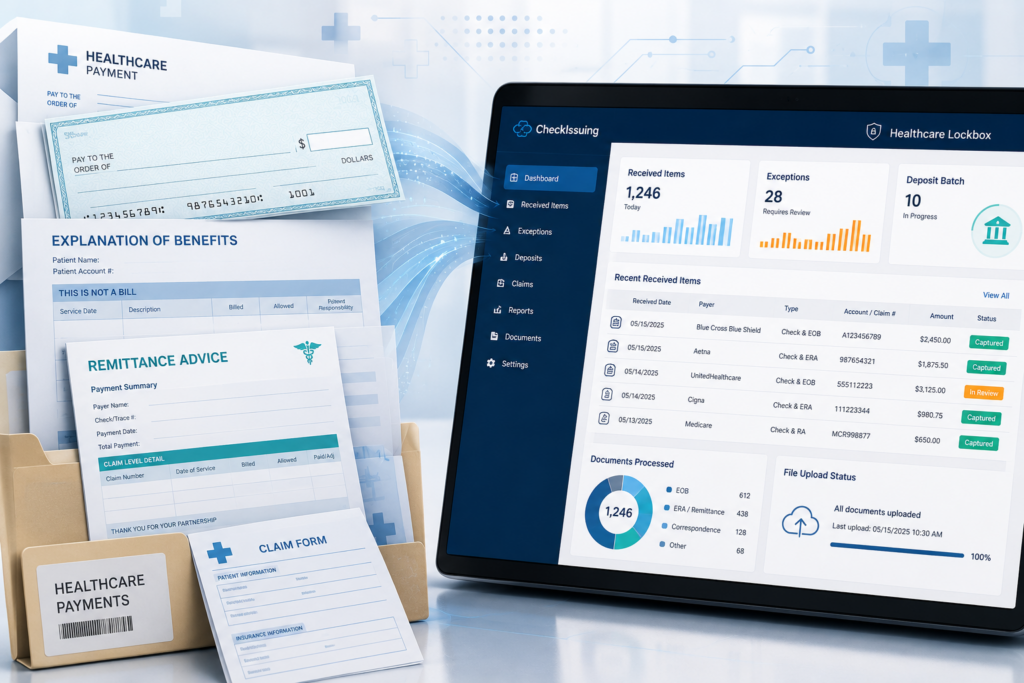
A healthcare payment envelope rarely holds just a check. More often, it carries an explanation of benefits, a remittance note, a claim number scrawled in the corner, or a patient account reference that only makes sense to whoever opens the mail that morning. The check tells you money arrived. It doesn’t tell you where it […]
Why Businesses Need Visibility Into Every Step of the Payment Processing Workflow
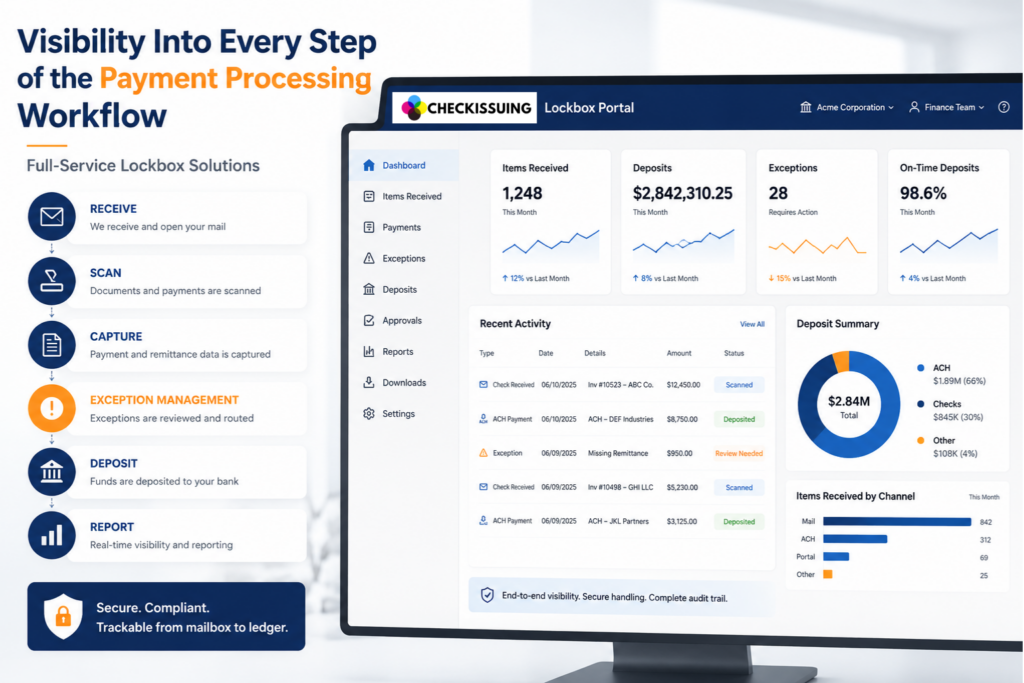
Finance teams usually learn that a payment arrived before they learn what it was for. The bank shows a deposit total, and that number matters, but it does not explain what came in, which documents supported it, what still needs review, or whether it landed against the right account. That gap sits at the center […]
What Finance Teams Should Know About Remittance Lockbox Processing
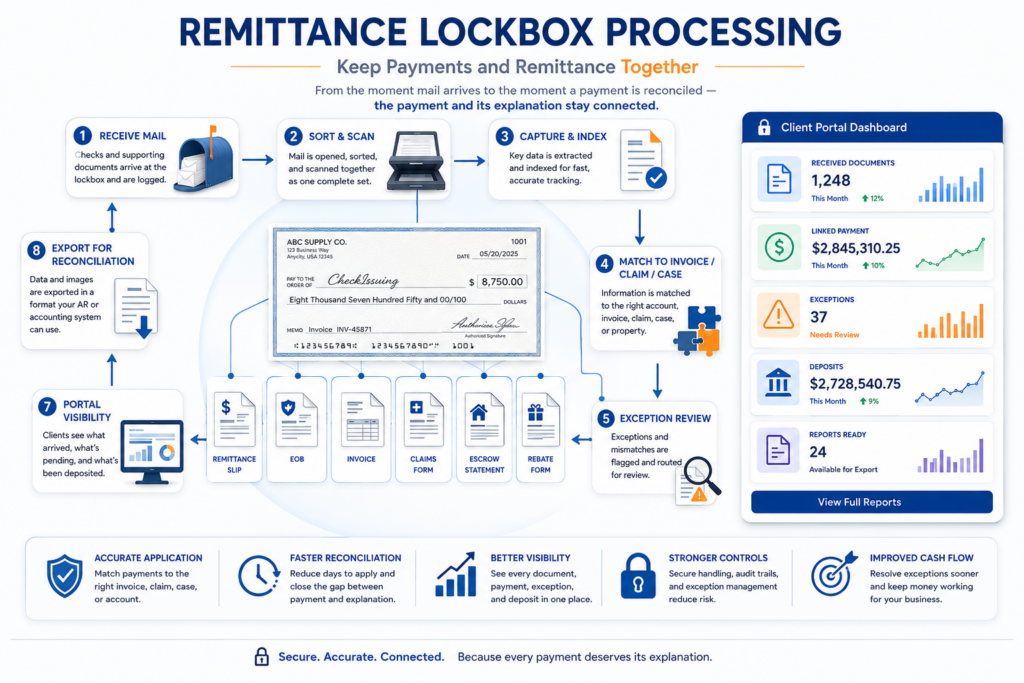
A check can clear the bank before anyone on the finance team knows which invoice it was meant to close. The money shows up, but the explanation doesn’t always follow. According to a 2025 survey from the Financial Education & Research Foundation (FERF), 60% of AR teams named delayed or missing remittance details as their […]
Why Physical Receivables Still Matter in a Digital Business Environment

A finance team can run its books in the cloud, settle most payments through ACH, and coordinate work across three offices without ever touching a paper file, and still, almost every week, someone must open an envelope. Inside might be a check, an EOB, a claim form, or an escrow document. That envelope is part […]
Bank Lockbox Services vs Outsourced Lockbox Services: What Businesses Should Know
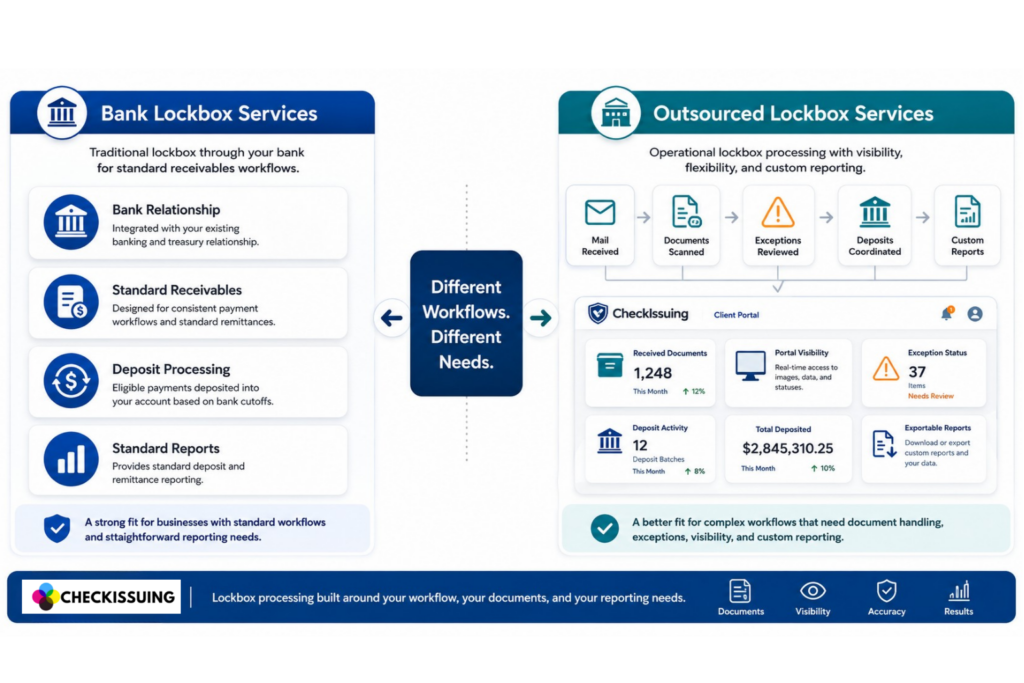
If your business still receives checks, remittance documents, invoices, claims, coupons, legal paperwork, healthcare documents, or other payment related mail, a lockbox process can help create a more controlled way to receive, review, deposit, and report on incoming payments. For many organizations, the first option that comes to mind is a bank lockbox service. That […]
Full-Service Lockbox Processing vs Lockbox Software: What Is the Difference?
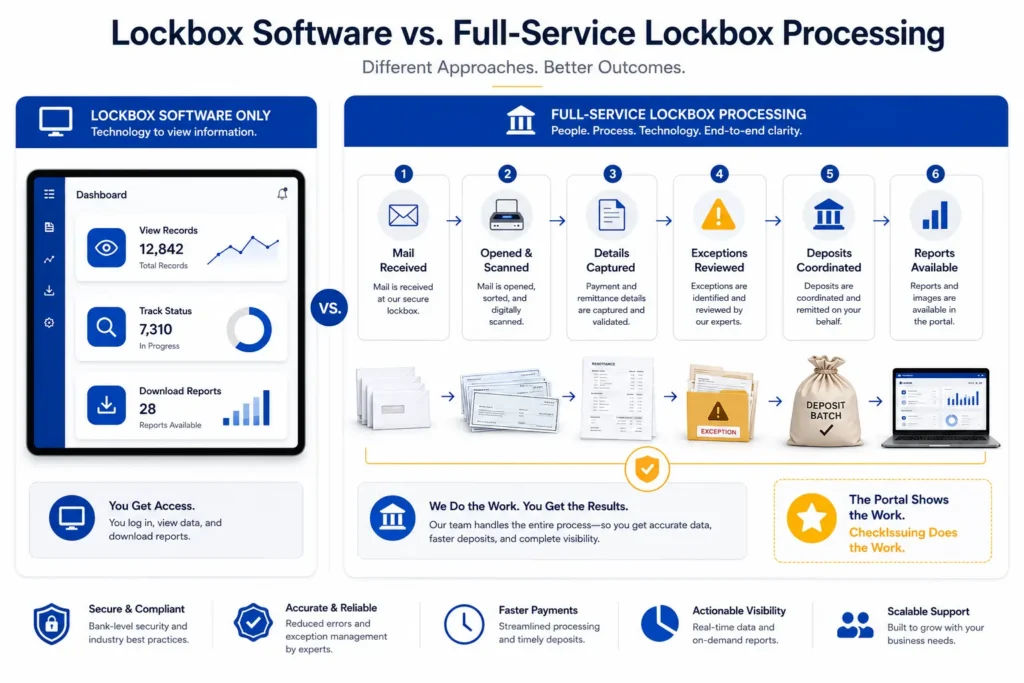
Lockbox software and full-service lockbox processing are often grouped together, but they solve different problems. Lockbox software gives teams a place to view payment information, manage records, or track payment-related activity. That can be useful. But software alone does not always solve the physical work behind incoming check payments and related documents. Someone still needs […]
How Lockbox Services Help Remote Teams Manage Physical Mail Workflows
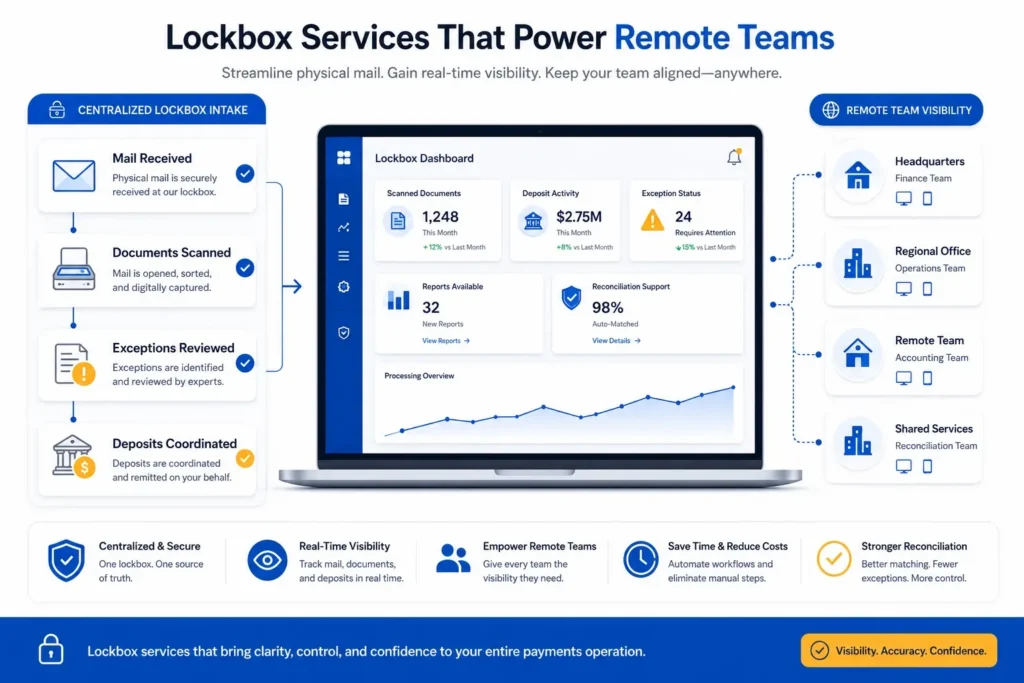
Remote work reorganized where people do their jobs. It did not reorganize the destinations for checks, remittance documents, claim forms, and legal correspondence. Lockbox services for remote teams exist precisely for this gap. When physical mail still reaches a fixed address, but the team is distributed, informal handling is not a sustainable answer. Quick Answer […]
How Do Lockbox Services Work? From Mail Received to Reports Available
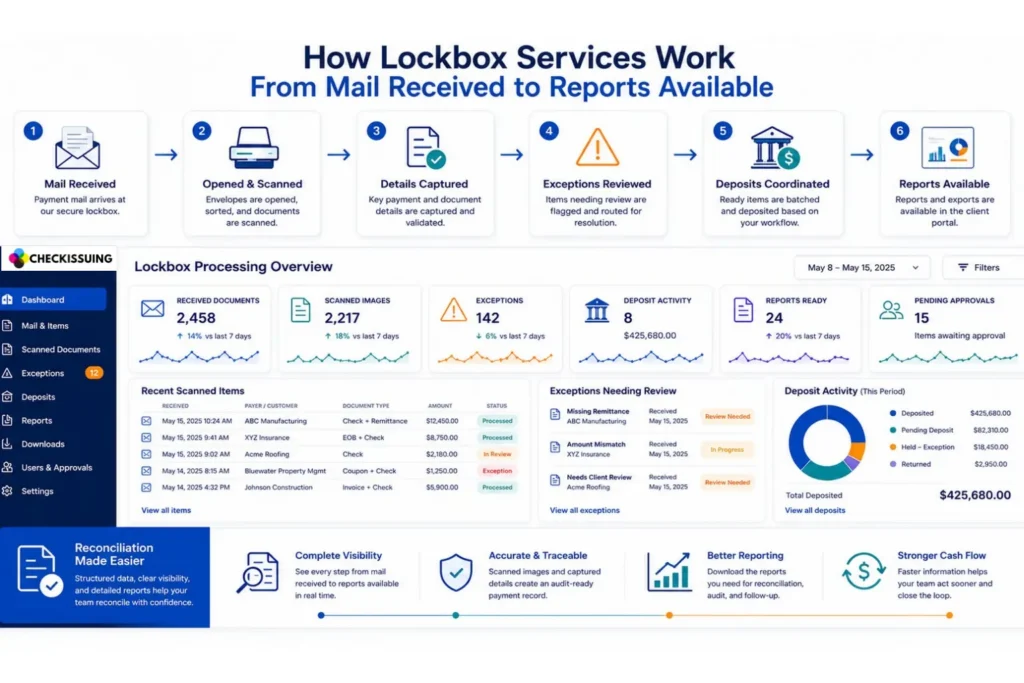
Lockbox services sound simple from the outside. A customer mails a check, a provider receives it, and the payment gets processed. But for finance, accounts receivable, rebate, legal, healthcare, property, claims, and operations teams, the real value is in what happens between those steps. Who received the mail? Was the check scanned? Was the payment […]
How Lockbox Services Support Faster Payment Reconciliation Workflows
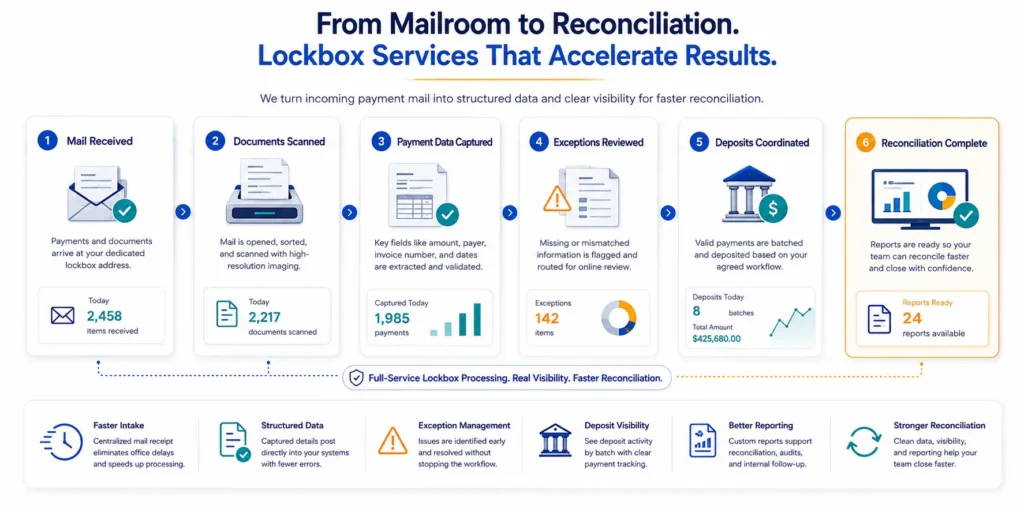
Most reconciliation delays start earlier than people expect. They begin before anyone opens an envelope or reads a remittance slip, while checks sit in trays and payment details wait to be matched by hand. When intake is scattered and manual, payment reconciliation falls behind from the start. This is where lockbox services help. Full-service processing […]
What Happens When Businesses Manage ACH Direct Deposit Service and Printed Payments Separately
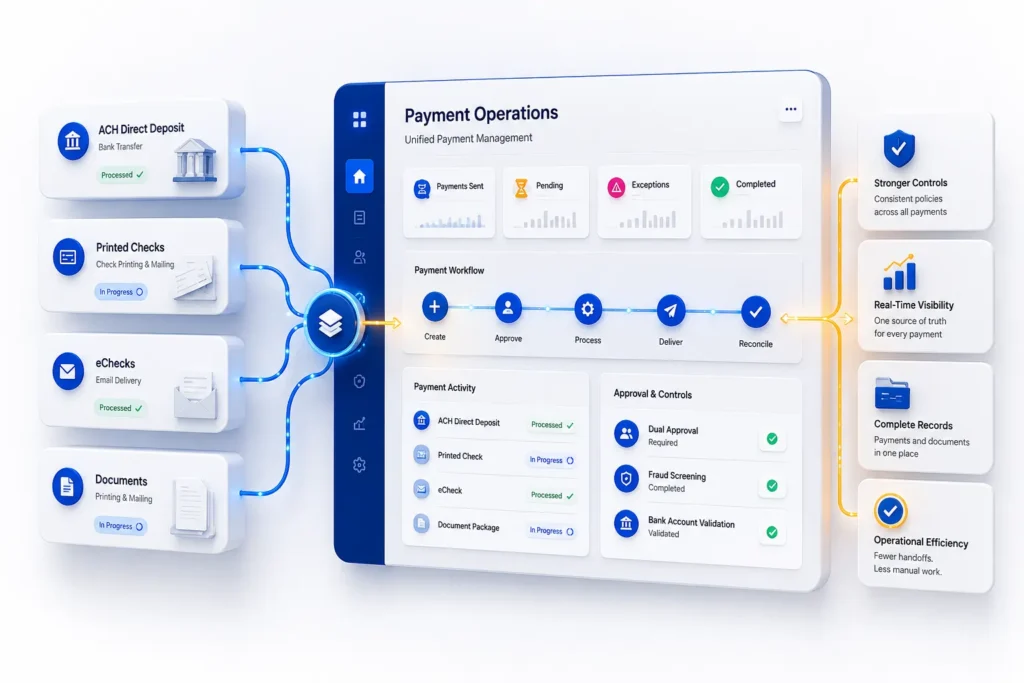
Many businesses rely on both ACH direct deposit service and printed checks at the same time, but manage them through entirely separate systems, vendors, and approval chains. That separation is where the real problems start. When payment processing workflows are disconnected, finance teams lose visibility, absorb avoidable errors, and spend more time chasing payment status […]