

Whether you’ve been an employee of a company that offers direct deposit or an organization considering ACH direct deposit as a payment option, the handling and transferring of sensitive personal and banking information can cause concern. One of the most common questions employers ask when considering financing and payment methods revolves around a simple concept: the safety of direct deposit and the common employee question, ‘When will my direct deposit go through?’ Below, we’ve outlined all the information you need to know about direct deposit so your organization can make important financial decisions that meet your employees’ needs without compromising sensitive data.
Quick Answer Summary
ACH direct deposit is a secure electronic payment method that transfers payroll and other payments directly into a recipient’s bank account through the Automated Clearing House (ACH) Network. Compared to paper checks, ACH direct deposit reduces the risk of lost or stolen payments, improves payroll efficiency, lowers processing costs, and provides employees with faster, more reliable access to their funds.¹
Key Takeaways
- ACH direct deposit securely transfers payroll and other payments through the Automated Clearing House (ACH) Network rather than issuing paper checks.¹
- Direct deposit helps reduce the risks associated with lost, stolen, or altered paper checks.
- Payment timing depends on payroll processing schedules, banking institutions, and ACH processing windows.
- Employers can improve payment accuracy by securely collecting and verifying employee banking information before processing payroll.
- ACH direct deposit reduces payroll administration costs while improving convenience for both employers and employees.
- CheckIssuing provides secure ACH Direct Deposit services that integrate with broader payment workflows, including check printing, digital checks, lockbox services, and document mailing.

Is ACH Direct Deposit Safe?
If your organization is considering using ACH direct deposit, it is essential to educate yourself on the built-in safety features of this payment method. While there are several ways to answer whether direct deposit is safe, we will take a closer look at its safety features and dispel some common direct deposit myths.
One of the biggest safety features direct deposit offers employers comes down to liability. According to a study done by the United States Department of the Treasury, you’re more than 30 times more likely to encounter an issue with paper checks than with direct deposit. There are several issues individuals with paper checks face that can lead to problems cashing their checks, including identity theft.
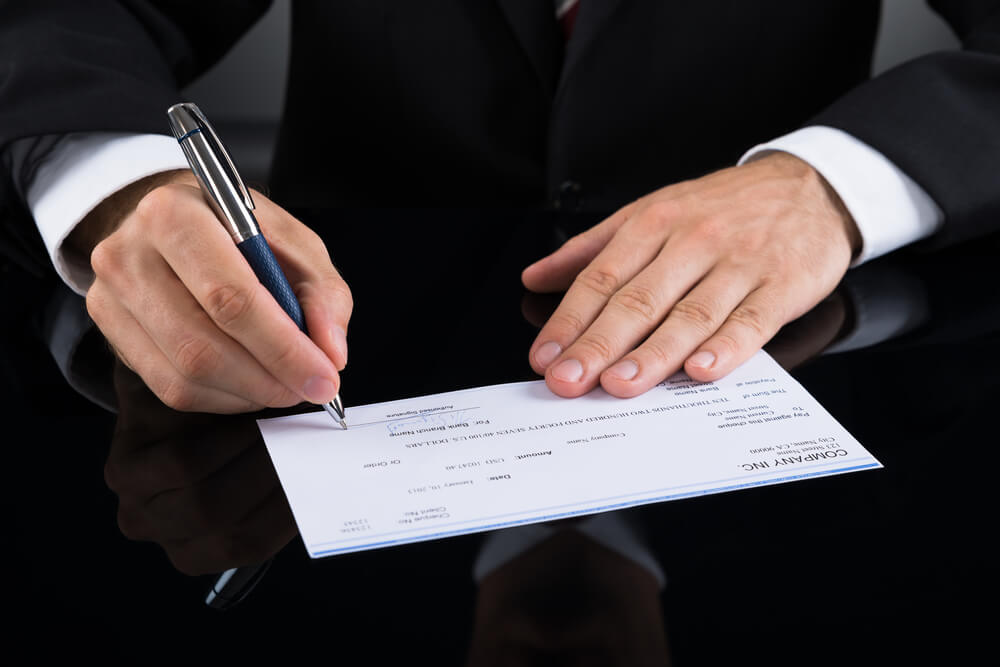
Another problem that many companies that only offer paper checks frequently deal with is the risk of lost or stolen checks. While many Americans seem to believe that individuals must have a verified signature to cash a check, the reality is that someone can cash or deposit a check fraudulently. Additionally, if an employee loses a paper check or has it stolen, issuing a stop payment and receiving a new check often incur significant fees that can be costly for the employer.
Lastly, many individuals believe that direct deposit payments are deposited into their bank account via the internet. However, the US Department of the Treasury explains that direct deposits are initiated and processed through a secure, encrypted electronic banking system. Employers and employees can track the payment from the time it is processed by the employer’s payroll system until it is deposited into the employee’s account.
Another important consideration when it comes to ACH direct deposit safety is that issues with direct deposits often arise at the bank level. Typically, the issues employees encounter result directly from incorrect names on bank accounts or misread direct deposit information. Employers who provide their employees with a secure channel to opt in to direct deposit systems and to verify payment accounts help avoid potential identity theft and other risks.
What Time Do Checks Get ACH Direct Deposited?
Another common question employers encounter when employees enroll in direct deposit is, “What time does direct deposit hit?” Answering this question depends on several different factors, such as:
• When in the pay cycle, the employee enrolls in direct deposit
• How employers have their direct deposit accounts configured
• The banking institution the employee uses
• Whether the employer offers and allows advanced direct deposit, compared to when paper checks go out
• If the bank offers advanced processing for direct deposit
Ultimately, answering the question depends on answering another question: what time do checks get direct deposited? Companies negotiate with their payroll provider to establish a payment schedule, which may vary depending on the payroll provider’s benefit packages. For instance, employers may choose to pay their employees on a monthly, bi-weekly, or weekly basis, depending on their agreement with the payroll company.
This pay schedule also includes the time for direct deposit payouts. Most companies send direct deposits to employee bank accounts approximately two days prior to their official payday. This process allows banks time to receive and verify the payments, ensuring they are deposited into the correct account.
One major perk of direct deposits is the ability to receive money early; however. Some companies choose to offer “early payday” for direct deposits. This process incentivizes employees to enroll in their direct deposit programs, providing an added layer of security for the company. Typically, this means individuals who enroll in the organization’s direct deposit program receive their payment a few days before paper checks become available.
Lastly, another significant factor in determining when employees receive their direct deposit is the financial institution they trust with their finances. Different banking organizations process direct deposits at varying speeds, and some will not process deposits received after a certain time until the next business day. Therefore, it is essential for employees to familiarize themselves with their financial institution’s policies on processing direct deposit payments.
How ACH Direct Deposit Works
Another way employees and employers can feel secure using direct deposit is to understand how the direct deposit process works. An organization’s payroll company receives timesheets for each employee, including any applicable deductions for health insurance, income taxes, personal elections, and mandated government withholdings. The payroll organization then authorizes its electronic banking system to deduct the specified amount from the employer’s account, as per the employee’s timesheet.
Funds then travel through the secure, data-encrypted system from the employer’s payout account to the employee’s designated bank for approval. The employee’s banking institution conducts an in-house verification to ensure there are no significant issues with the wire transfer. Should they encounter any problems, they often reach back out to the payroll company for clarification.
Once the financial institution determines there are no problems with the direct deposit, or resolves any issues with the payroll company and the employee, they post it to the employee’s account. Some banking institutions clear direct deposit funds for immediate release, while others withhold funds until the posting date specified in the initial direct deposit.
Therefore, the speed at which an employee receives their check depends on the bank’s policies and procedures. However, checks that clear after the bank’s stated post time may not be accessible until the next business day.
Compared to printing and distributing traditional paper checks, direct deposit payments are more secure, more affordable, and highly convenient. Employers often save hundreds, if not thousands, of dollars a year in processing fees by choosing direct deposit over traditional paper checks. Employees rest easy knowing they will consistently receive a paycheck on the same day, at the same time.
Simplify Payroll With ACH Direct Deposit
ACH Direct Deposit gives businesses a faster, more secure, and more efficient way to pay employees while reducing the costs and risks associated with paper checks. Whether you’re processing payroll for a small business or managing payments across multiple locations, CheckIssuing helps simplify your payment operations.
Contact us today, give us a call, or schedule a meeting with our team to learn how CheckIssuing’s ACH Direct Deposit services can streamline your payroll process.
Citations
- U.S. Department of the Treasury – Official Treasury Resources – https://home.treasury.gov/
Last updated: September 2025